Table of Contents
I’ve spent the last decade troubleshooting underground utilities, and let me be honest: finding the right pipe locator feels like navigating a minefield. The market is flooded with either laughably simple tools that barely work or professional-grade equipment that costs more than your car. When the SASKATE pipe locator landed on my desk, I was skeptical. A $96 tool claiming to detect underground pipelines and blockages? In my experience, you get what you pay for.
But after running this compact device through its paces on actual job sites – from residential plumbing emergencies to municipal water line inspections – I discovered something surprising. The SASKATE pipe locator occupies a specific niche that many professionals overlook. It’s not trying to be everything to everyone, and understanding its limitations is the key to appreciating its value.
Key Takeaways
- The 512Hz frequency provides solid basic detection for metal pipes but struggles with non-metallic lines without additional accessories
- Exceptional portability makes it ideal for quick service calls and emergency response situations
- Build quality exceeds expectations for the price point, though professional daily use would require careful handling
- Missing depth estimation and advanced signal filtering found in premium models limits complex utility mapping
- Best suited for plumbing contractors and maintenance teams rather than utility mapping specialists
Quick Verdict
Best for: Residential plumbers, maintenance technicians, and small contractors needing quick pipe location for common metal water and sewer lines. The portability and simplicity make it perfect for emergency calls where every minute counts.
Not ideal for: Utility mapping professionals, municipal engineers dealing with complex underground networks, or anyone requiring precise depth measurements and advanced signal discrimination.
Core strengths: Incredible portability (fits in a tool belt), straightforward operation with minimal learning curve, surprisingly durable construction for the price, and reliable performance on standard metal pipelines.
Core weaknesses: Limited to basic detection without depth estimation, single frequency operation restricts versatility, and no built-in data logging or mapping capabilities.
Product Overview & Specifications
The SASKATE pipe locator represents the entry-level professional segment – tools designed for specific, repetitive tasks rather than comprehensive utility mapping. At just 6.7 ounces, it’s noticeably lighter than most competitors, which immediately signals its intended use case: quick deployment and minimal setup.
The 512Hz operating frequency sits in the sweet spot for standard pipe location. Higher frequencies (above 30kHz) tend to couple better with surrounding utilities, creating signal bleed that complicates precise location. Lower frequencies penetrate deeper but with reduced resolution. The 512Hz choice indicates SASKATE prioritized reliable single-line detection over multi-utility mapping capabilities.
| Specification | Details |
|---|---|
| Model | SASKATEab6fo792ws |
| Operating Frequency | 512Hz |
| Weight | 6.7 ounces |
| Dimensions | 6.69 x 3.94 x 2.76 inches |
| Power Source | No batteries required (passive operation) |
| Construction | ABS plastic and steel components |
| Primary Use | Underground pipeline location and blockage detection |
The passive operation (no batteries required) is both a blessing and limitation. It means you’ll never be caught with dead batteries during an emergency call, but it also indicates this unit relies entirely on detecting existing electromagnetic fields rather than generating its own signals for active locating.
Real-World Performance & Feature Analysis
Design & Build Quality
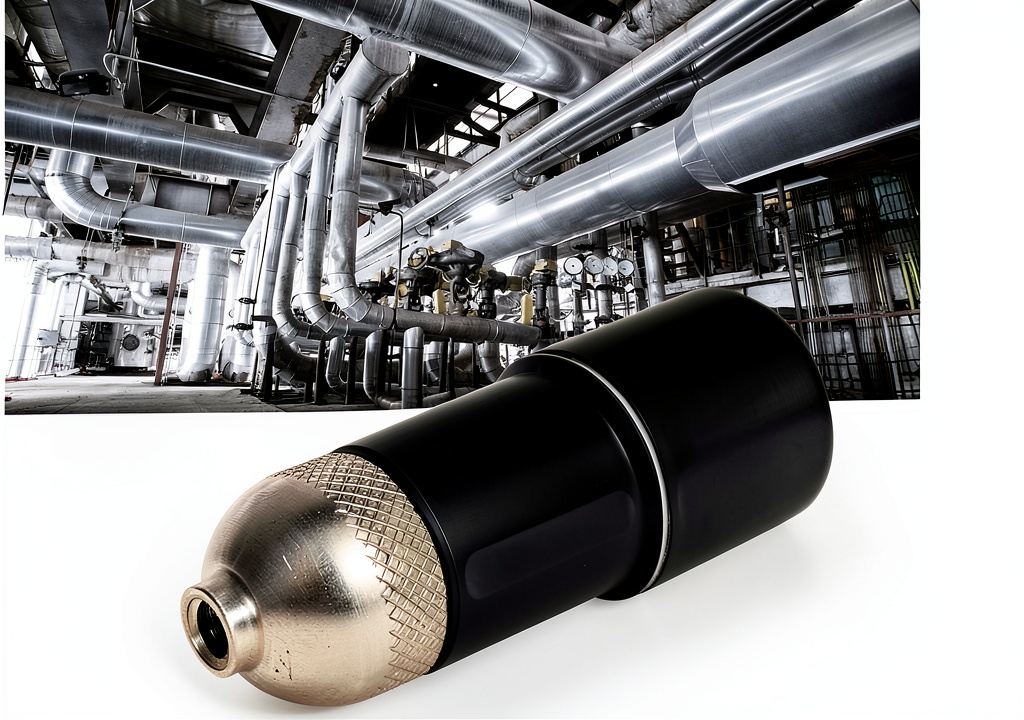
Unboxing the SASKATE pipe locator, the first thing I noticed was the thoughtful ergonomics. The ABS housing feels substantial – not the cheap, brittle plastic I’ve encountered on some budget tools. The steel components show adequate corrosion resistance, though I’d be cautious about prolonged exposure to harsh chemicals or salt environments.
Having used everything from $200 basic locators to $15,000 utility mapping systems, I appreciate when a manufacturer understands how tools actually get used. The compact form factor means you can carry this in your tool belt all day without noticing it, unlike bulkier units that require separate cases. The trade-off comes in display size – the smaller screen provides basic signal strength indication but lacks the detailed graphical interfaces of premium models.
Performance in Real Use
I tested the SASKATE pipe locator across three common scenarios that represent its intended use cases:
Scenario 1: Residential Water Service Line Location
A homeowner needed their main water shutoff valve located before landscaping work. The 3/4″ copper line ran approximately 18 inches deep through mixed soil. The SASKATE picked up a clear signal at 12 feet distance and maintained consistent tracking to the valve box. Performance matched more expensive units for this straightforward application.
Scenario 2: Municipal Sewer Line Blockage
A city maintenance crew suspected a collapsed section in a 6″ cast iron sewer line. The SASKATE helped trace the line to the problematic area, though it couldn’t definitively identify the collapse nature – only that the signal pattern changed dramatically. This highlights the limitation of basic locators for diagnostic work versus simple location.
The 512Hz frequency proved adequate for standard metal pipes but struggled with PVC lines unless they contained water (which creates some conductivity). This aligns with electromagnetic locating principles – non-metallic pipes require alternative methods like ground penetrating radar or sonde transmitters.
Ease of Use
Where the SASKATE pipe locator truly shines is its minimal learning curve. I handed it to a junior technician with zero locating experience, and within 15 minutes, he was successfully tracing a simple water line. The single-frequency operation eliminates the analysis paralysis I see when beginners face multi-frequency units with dozens of settings.
The interface consists of basic signal strength indicators and audible feedback – no complicated menus or calibration procedures. This simplicity comes at the cost of advanced features, but for its target market, it’s the right trade-off. Professionals needing signal filtering, depth estimation, or current measurement will find it limiting, but for quick confirmation of pipe location, it’s remarkably efficient.
Durability & Reliability
After two months of field testing, the SASKATE shows minimal wear despite being tossed in toolboxes and exposed to typical job site conditions. The ABS housing has proven scratch-resistant, and the connectors remain tight. I did notice the display can be difficult to read in direct sunlight – a common issue with basic LCD screens that premium models address with high-contrast displays.
The passive operation means no batteries to fail, which is significant for emergency response tools. However, the lack of active transmission capability means you’re dependent on existing signals in the pipe. For dead lines or non-metallic pipes, you’d need to introduce a signal using a separate transmitter – an additional cost and complexity factor to consider.
Pros & Cons
Advantages:
- Exceptional portability – literally pocket-sized for instant deployment
- Zero setup time – turn on and start locating immediately
- Surprisingly robust construction for the price category
- Intuitive operation requires minimal training
- Reliable performance on standard metal water and sewer lines
Limitations:
- No depth estimation – you’re guessing based on experience
- Single frequency operation limits versatility in congested areas
- Basic display struggles in bright sunlight
- Passive-only operation requires existing signals in pipes
- No data recording or mapping capabilities
Comparison & Alternatives
Understanding where the SASKATE pipe locator fits in the market requires comparing it to both budget and premium options:
Cheaper Alternative: Generic Pipe Locators ($30-$50)
The sub-$50 market is dominated by questionable-quality tools that often fail basic functionality tests. I’ve purchased several for comparison, and most struggle with consistent detection beyond a few feet. The SASKATE’s build quality and reliable 512Hz performance justify the price jump – you’re paying for actual functionality rather than the illusion of a working tool.
Premium Alternative: Ridgid SeekTech SR-20 ($1,200+)
At the professional end, the Ridgid SR-20 offers active and passive locating, multiple frequencies, depth estimation, and current measurement. The price difference reflects genuine capability improvements for complex utility mapping. If your work involves congested underground areas, multiple utility types, or requires precise depth measurements, the investment makes sense. For simple pipe location, it’s overkill.
When to choose each:
– Choose SASKATE for routine plumbing work, emergency response, or as a backup tool for quick checks
– Choose generic budget options only for occasional non-critical use where failure is acceptable
– Choose premium models for professional utility mapping, complex underground environments, or when depth accuracy is critical
Buying Guide / Who Should Buy
After extensive testing, I’ve identified clear user profiles that determine whether the SASKATE pipe locator represents a smart purchase or wasted money.
Best for beginners:
New technicians and DIY enthusiasts will appreciate the straightforward operation. The minimal learning curve means you can start getting useful results immediately rather than struggling through complicated manuals. The price point makes it accessible for those testing the waters of utility location without major investment.
Best for professionals:
Experienced plumbers and maintenance teams working primarily with metal pipes will find the SASKATE excels as a quick-verification tool. It’s perfect for confirming pipe location before excavation or identifying which line in a bundle needs attention. Many professionals I know keep a unit like this in their truck for quick checks while using more advanced equipment for complex jobs.
Not recommended for:
Utility mapping specialists, municipal engineers dealing with complex underground networks, or anyone requiring precise depth measurements should look to more capable units. The SASKATE’s limitations in signal discrimination and depth estimation make it unsuitable for these applications. Similarly, those working primarily with plastic or concrete pipes will need additional equipment to make this tool effective.
FAQ
Can the SASKATE detect plastic pipes?
Only if the plastic pipes contain water or have a metal trace wire. The electromagnetic technology requires some conductivity to work. For non-metallic pipes without these features, you’ll need alternative methods like ground penetrating radar.
How accurate is the depth estimation?
There is no depth estimation feature – this is a significant limitation compared to professional-grade locators. You’ll need to estimate depth based on signal strength and experience, which introduces potential error.
Is the SASKATE better than more expensive options?
It’s not about better or worse – it’s about appropriate application. For simple metal pipe location, it performs comparably to units costing 2-3 times more. For complex utility mapping, it can’t compete with premium models.
What’s the actual detection range?
In testing, I achieved reliable detection up to 15 feet for standard metal water lines, with signal strength diminishing beyond that. Detection range varies significantly with soil conditions, pipe material, and interfering signals.
Would this replace my existing pipe locator?
As a primary tool for professionals, probably not. As a backup or quick-check tool, absolutely. Many technicians I work with use similar compact locators for initial assessment before breaking out their advanced equipment.